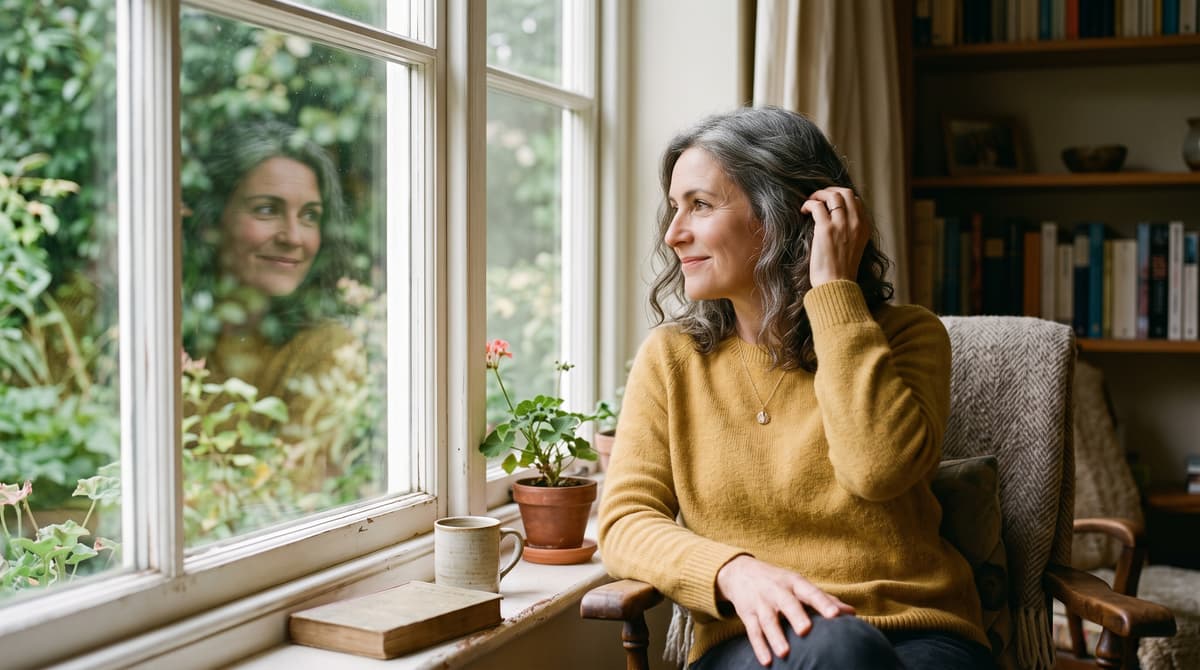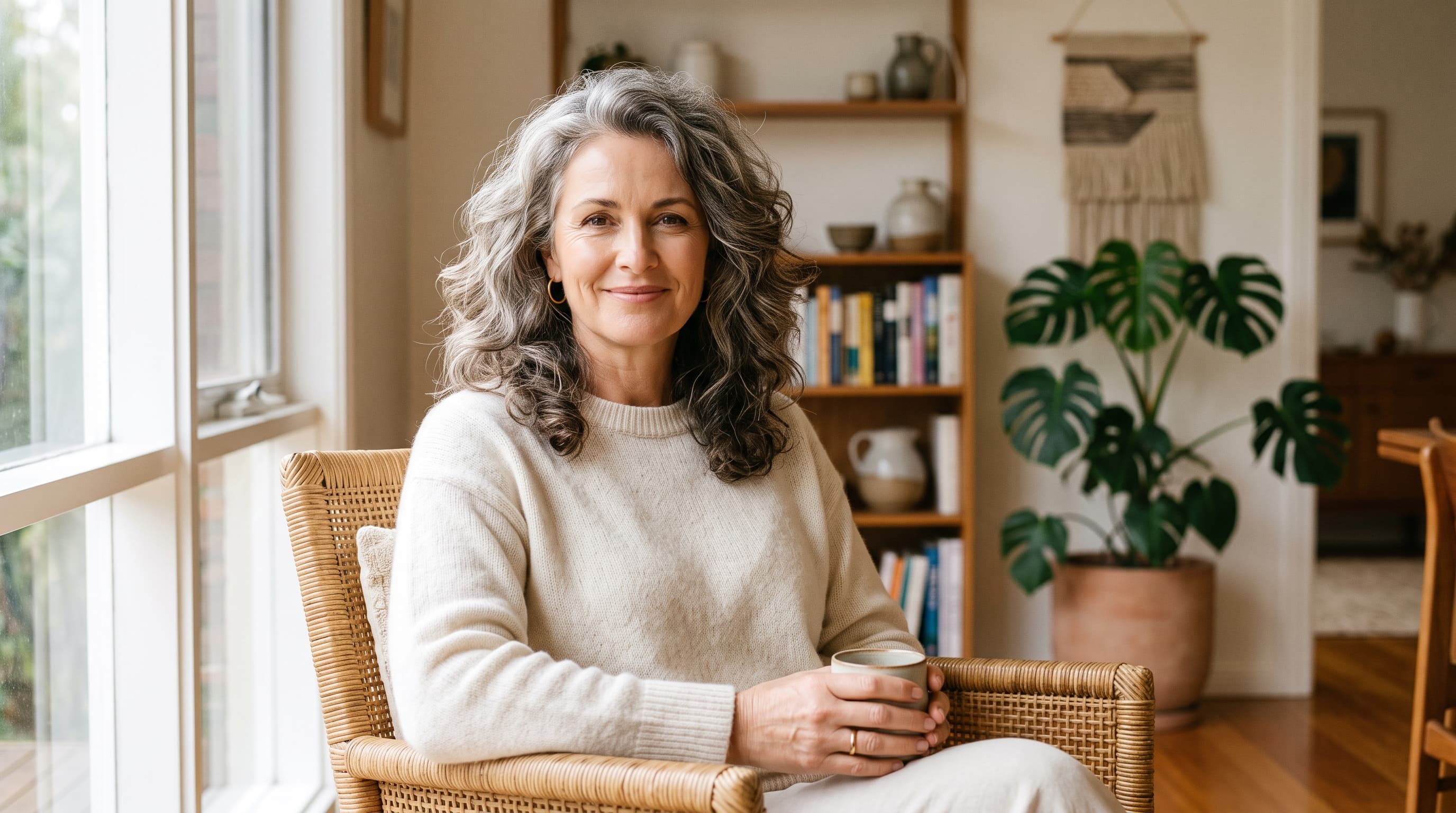
Something significant happened in Australia this year. For the first time ever, the Federal Government launched a national campaign on perimenopause and menopause, bringing a topic that millions of Australian women live with every day into the open, onto television screens, and into conversations that are long overdue — including, at last, the conversation about menopause hair loss.
If you’ve found yourself recognising your own experience in that campaign (the 3am waking, the brain fog, the shifts in your body that no one properly warned you about), you’re not alone. And if one of those shifts has been thinning hair, you’re in very good company. Menopause hair loss is one of the most common symptoms women experience, and one of the least talked about, until now.
At Applebom, we’ve been helping women navigate menopause hair loss in Toowoomba and the Darling Downs for years. We’re glad the rest of Australia is catching up.
Why Menopause Affects Your Hair
To understand menopause hair loss, it helps to understand what oestrogen actually does for your hair, because most of us were never taught.
Oestrogen plays a key role in keeping hair in its growth phase, called the anagen phase, for longer. As oestrogen levels decline during perimenopause (which can start in your late 30s or 40s), the hair growth phase shortens. This is often the first sign of perimenopause hair thinning: more hairs shift into the resting and shedding phases at once, and the follicles that remain can begin to produce finer, thinner strands than before.
At the same time, the relative increase in androgen levels (naturally present in all women, but more prominent when oestrogen drops) can cause follicles to shrink, a process called miniaturisation. This is why menopause-related hair loss often shows up as a gradually widening part, thinning at the crown, or an overall reduction in volume rather than a dramatic or sudden change.
By age 50, around 40% of women experience some noticeable form of hair thinning. For many, it’s one of the most emotionally significant changes of the menopause transition, and often the one they feel least able to talk about.
The Conversation We’ve Been Waiting For
The Australian Government’s national menopause campaign, backed by $12.8 million and running through to the end of 2026, is the first of its kind in this country. It targets women aged 35 and older, acknowledges the full range of perimenopause and menopause symptoms, and directs women to evidence-based support at health.gov.au/perimenopause.
Since Medicare began covering menopause health assessments in July 2025, more than 105,000 Australian women have had that conversation with their GP for the first time. That’s 105,000 women who may now be learning that what they’ve been experiencing, including the hair loss, has a name, and that there are options.
We think that’s worth celebrating. And we also think it’s worth adding something to that conversation that the campaign doesn’t quite cover: what you can do right now, while you’re navigating everything else, to feel like yourself again.
What Medical Treatments Can and Can’t Do
If you’re noticing menopause-related hair loss, speaking with your GP is absolutely the right starting point, particularly now that menopause health assessments are covered by Medicare. Hormonal treatments, including menopausal hormone therapy (MHT), may help slow or reduce hair thinning for some women. Other options, such as topical minoxidil, are sometimes recommended.
But here’s the honest reality about menopause hair loss treatment in Australia: medical treatments work gradually, results vary significantly between individuals, and for many women they don’t fully restore the volume and density they’ve lost. That doesn’t mean they’re not worth exploring. They may be exactly what you need. It means that for a lot of women, the medical path and the practical path work best together.
That’s where a hair topper comes in.
How a Hair Topper Fits Into Your Menopause Journey
A well-fitted 100% Remy human hair topper doesn’t treat hair loss. What it does is give you back the one thing that thinning hair so often takes away: the ability to look in the mirror and feel like yourself.
At Applebom in Toowoomba, we fit toppers made from 100% Remy human hair: real hair, sourced from donors, processed so that all the cuticles face the same direction. It moves the way hair moves. It responds to heat styling the way your own hair does. When it’s fitted and colour-matched correctly, it sits flat against your scalp, your natural hair blends around the edges, and the result looks like your hair on a really, really good day.
Most of our clients tell us their family and close friends have no idea they’re wearing one. Some of them say that’s the moment they cried, not from sadness, but from relief.
The toppers we offer come in four configurations depending on how much coverage you need:
● Small Base Short (3” × 5” | 5–6” length): targeted coverage for early-stage or contained thinning
● Small Base Long (3” × 5” | 12–16” length): same targeted area, with added length
● Large Base Short (5.5” × 6” | 5–6” length): broader coverage for wider thinning across the crown
● Large Base Long (5.5” × 6” | 12–16” length): maximum coverage and a fuller, flowing result
Which one is right for you depends on where your thinning is, how much existing hair you have to blend with, and your lifestyle. That’s exactly what we work through together in a private consultation: no pressure, no rush.
Coming In Doesn’t Mean You’ve Given Up
We want to say this clearly, because we hear it sometimes: choosing to explore a hair topper doesn’t mean you’ve accepted your hair loss or stopped trying to address it. It means you’ve decided that right now, you deserve to feel confident, not in six months when a treatment might be working, and not once you’ve figured out all the answers.
The women who walk through our door are navigating a lot. Menopause is not a single symptom; it’s a whole season of change, and hair loss is just one part of it. Coming to Applebom is not a last resort. For many of our clients, it’s the first decision they’ve made in this whole process that feels entirely like their own.
You’re Part of a Much Bigger Conversation Now
The national menopause campaign is a beginning, not an end. It’s the start of Australian women being able to say, out loud and without shame, this is what I’m going through. That conversation deserves to include hair.
If you’re in Toowoomba or anywhere in the Darling Downs and you’re ready to take the next step, we’d love to meet you. A private consultation with Debbie at Applebom is a gentle, unhurried space to explore your options, try on a few toppers, ask every question you’ve been holding, and leave with clarity about what’s possible.
The campaign might have started the conversation. We’d love to be part of what happens next for you.